

 By
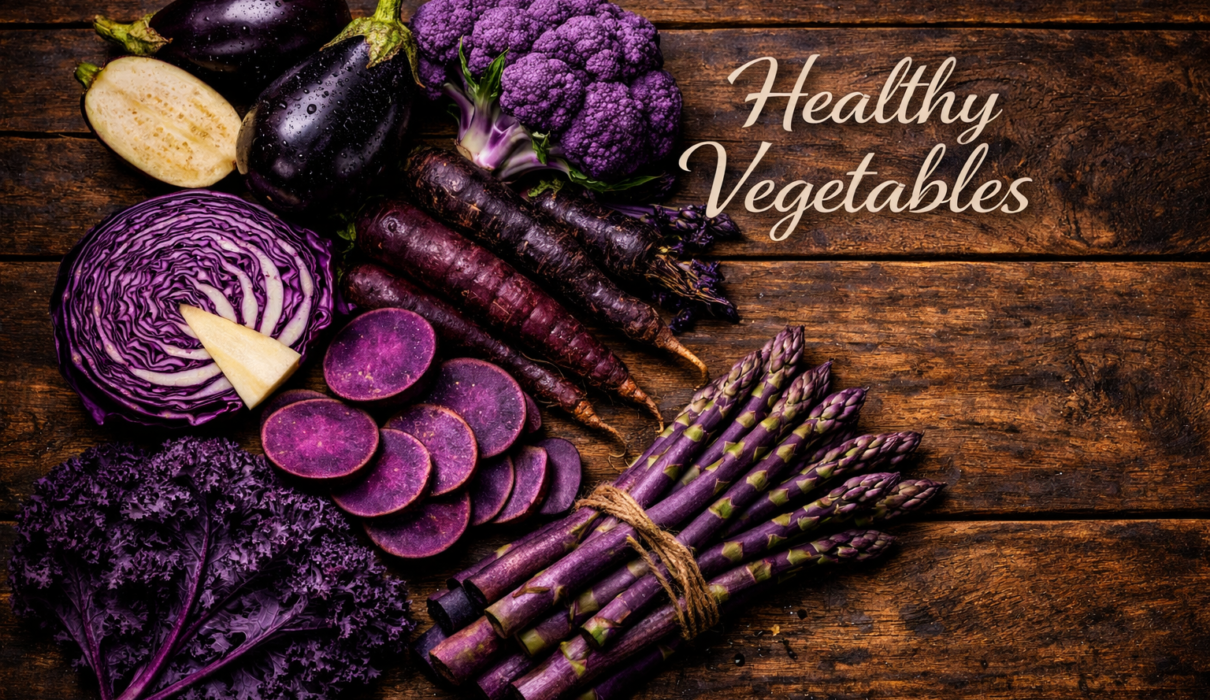
By Purple vegetables are gaining popularity in healthy diets due to their rich color, unique taste, and powerful health benefits. These vibrant vegetables are not only visually appealing but also packed with essential nutrients that support overall well-being.
In this guide, you will learn everything about purple vegetables, including their benefits, examples, nutrition, and how to use them in your daily meals.
What Are Purple Vegetables?
Purple vegetables are naturally colored vegetables that appear violet, deep blue, or dark purple. Their color comes from a plant compound called Anthocyanin, a powerful antioxidant also found in berries and grapes.
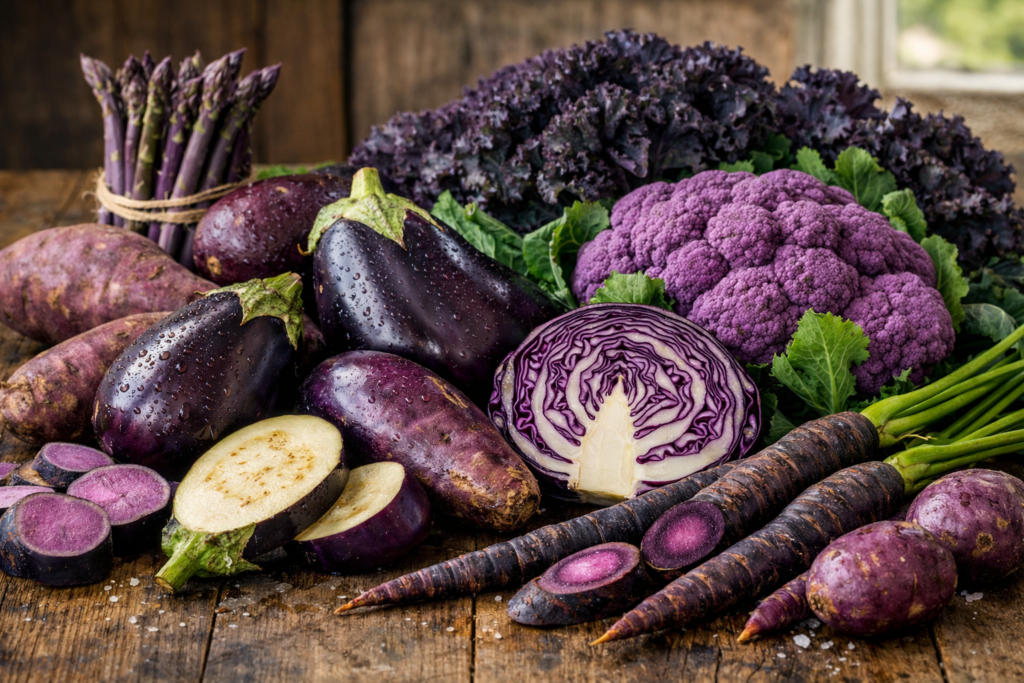
This pigment not only gives them their distinct color but also plays a key role in protecting your body from damage.
Why Are Purple Vegetables Important?
These vegetables are considered highly nutritious because they contain strong antioxidants and essential vitamins. Including them in your diet helps improve overall health and adds variety to your meals.
They are often called “superfoods” due to their disease-fighting properties.
Why Color Matters in Vegetables
The color of vegetables is not just for appearance; it actually tells you about their nutritional value. Purple vegetables get their rich color from Anthocyanin, which is a powerful antioxidant.
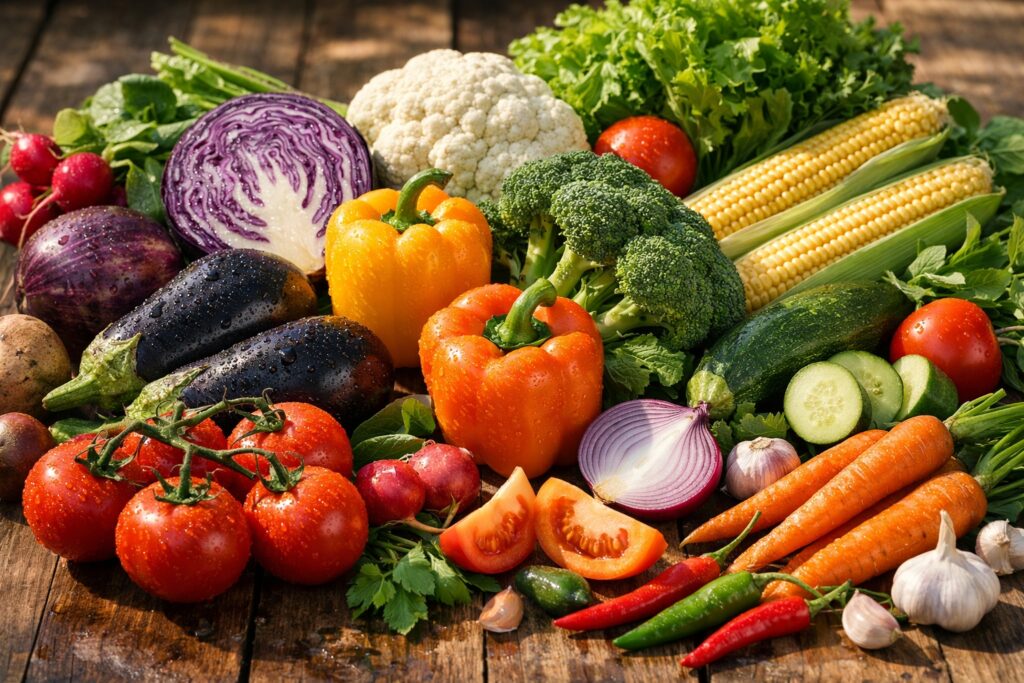
Different colors mean different nutrients. For example, green vegetables contain chlorophyll, while orange vegetables are rich in beta-carotene. Adding a variety of colors, especially purple, helps you get a wide range of health benefits.
Common Purple Vegetables List
Here are some popular, purple-coloured vegetables you can easily find:
- Eggplant (Brinjal)
- Purple cabbage
- Purple cauliflower
- Purple carrots
- Purple sweet potatoes
- Purple kale
- Purple asparagus
In the United States, these vegetables are widely available, but some are more common during specific seasons:
Seasonal Availability of Purple Vegetables
- Purple cauliflower – fall and winter
- Purple carrots – winter (often found at farmers’ markets)
- Eggplant – summer (peak season)
- Purple sweet potatoes – available year-round in most grocery stores
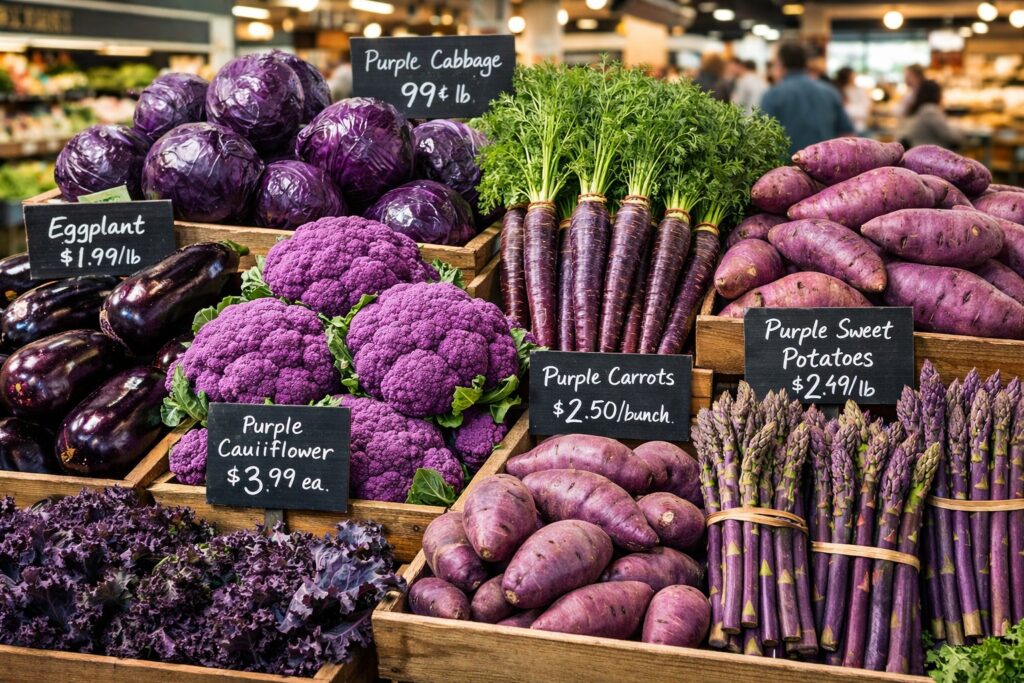
Shopping during peak seasons in the US ensures better freshness, flavor, and nutrition. You can find these vegetables in stores like Whole Foods Market, Trader Joe’s, or local farmers’ markets.
Health Benefits of Purple Vegetables
1. Rich in Antioxidants
These vegetables are loaded with anthocyanins that help fight harmful free radicals in the body.
2. Supports Heart Health
They may help lower blood pressure and improve blood circulation.
3. Boosts Brain Function
Anthocyanins are known to support memory and protect brain cells.
4. Reduces Inflammation
These vegetables help reduce inflammation, which is linked to many chronic diseases.
5. May Help Prevent Diseases
Regular consumption may lower the risk of heart disease, diabetes, and certain cancers.
Nutritional Value of Purple Vegetables
Purple coloured vegetables are packed with important nutrients such as:
- Vitamin A
- Vitamin C
- Vitamin K
- Fiber
- Potassium
- Antioxidants
These nutrients help strengthen immunity, improve digestion, and support overall health.
How to Use Purple Vegetables in Your Diet
You can easily include purple vegetables in your daily meals:
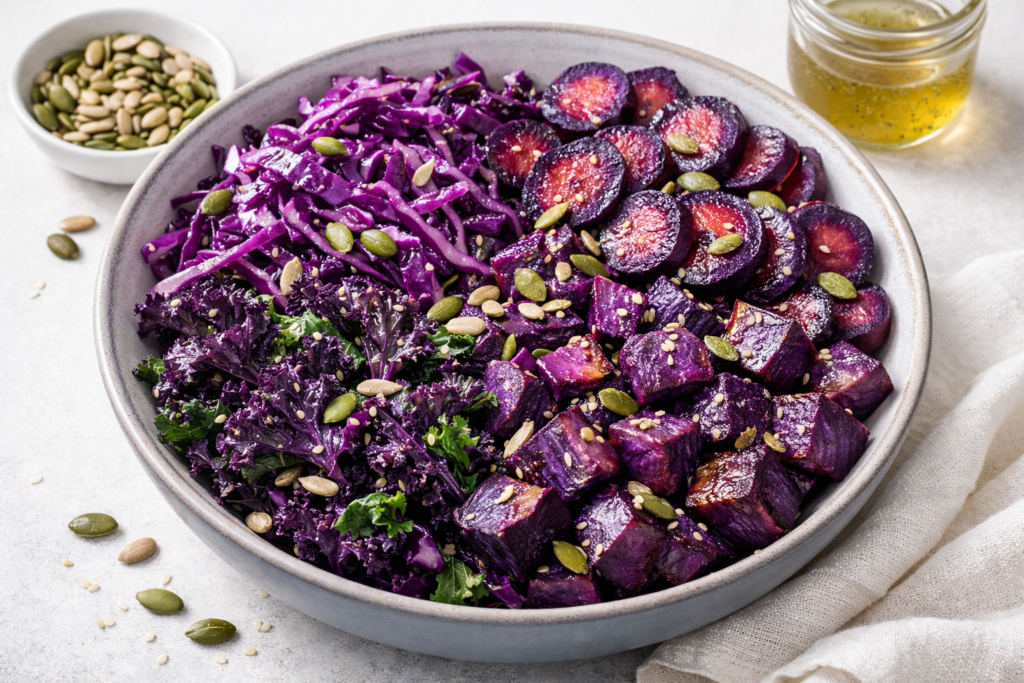
- Add them to salads for color and nutrition
- Use in curries and stir-fries
- Roast or grill for a healthy side dish
- Blend into soups or smoothies
- Use as natural food coloring
Are There Any Side Effects?
Purple coloured vegetables are generally safe to eat. However:
- Eating too much may cause mild digestive discomfort
- Allergies are rare but possible
Moderation is always the key to a balanced diet.
Final Thoughts
Purple vegetables are a great addition to a healthy lifestyle. They are rich in nutrients, full of antioxidants, and offer many health benefits. Including them in your daily diet can improve your health while making your meals more colorful and enjoyable.
Start adding purple vegetables to your meals today and enjoy their natural goodness.
If you enjoy growing your own food, you can also learn how to grow an avocado from a pit at home for a simple and beginner-friendly gardening project.